About FRP Lighting Pole Manufacturer
About Us: C J Engineering Works
Founded in 1972, C J Engineering Works is a trusted partnership company specializing in heavy metal forming and fabrication services for industries including chemical, hydropower, mining, shipping, and other heavy sectors.
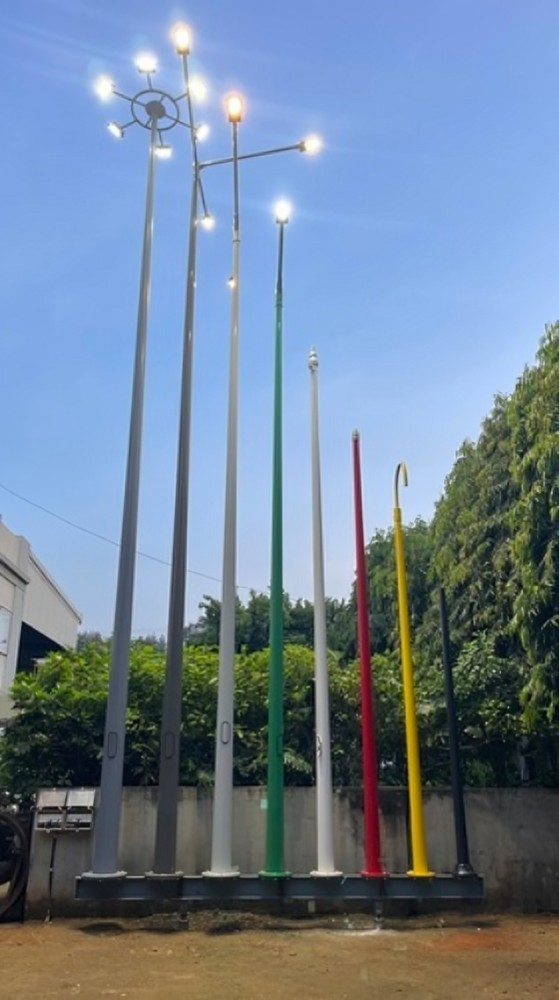
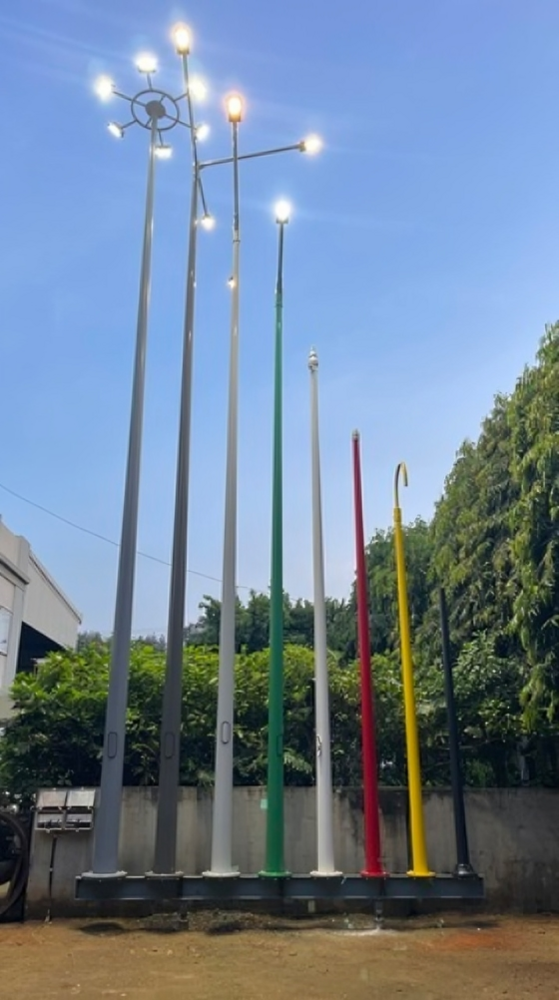
Over the years, we diversified our expertise and introduced innovative product lines to meet evolving industry needs. Under the brand CAMLIFT we manufacture high performance lifting clamps for safe handling of metal plates and fabricated structures. Further, leveraging our in house developed centrifugal moulding machine, we launched FRP GRP street light poles under the brand CENTRICOM delivering modern, durable, and maintenance free lighting solutions.
With a strong background in metal fabrication and FRP technology, our team ensures every product meets the highest standards of quality, reliability, and performance. All our manufacturing processes are backed by technical expertise, stringent quality checks, certifications, and 100 percent traceability making us a preferred partner across industries.
Key Offerings
- Heavy Metal Forming and Fabrication Services
- FRP GRP Street Light Poles CENTRICOM brand
- Lifting Clamps for Metal Plates CAMLIFT brand
- Custom Fabricated Structures for Industrial Applications
| Height |
10 M |
| Pole Type |
Round Conical |
| Material |
FRP/GRP |
| Power |
100 HP |
| Usage/Application |
ALL |
| Shape |
Conical |
| Brand |
CENTRICOM |
| Glass Content |
45-55% |
| Color |
As per client RAL no. |
Exceptional Durability & VersatilityBuilt from non-conductive, corrosion-resistant FRP materials, these lighting poles are designed for long-term performance in challenging environments. They resist UV degradation and maintain structural integrity, making them suitable for coastal, industrial, municipal, and residential lighting projects.
Ease of Installation & Low MaintenanceLightweight and robust, our FRP poles are simple to handle and install, whether using surface mount or direct burial methods. Their smooth polished finish requires less regular upkeep, reducing maintenance costs and downtime for users.
FAQ's of FRP Lighting Pole Manufacturer:
Q: How do FRP lighting poles withstand harsh coastal and industrial environments?
A: FRP lighting poles are manufactured with excellent corrosion resistance and UV stabilization, ensuring they remain unaffected by salty air, chemicals, or sunlight, making them highly suitable for coastal and industrial areas.
Q: What benefits do FRP lighting poles offer compared to traditional metal poles?
A: Unlike metal poles, FRP poles are lightweight, non-conductive, and highly resistant to corrosion and UV rays. This translates to easier handling during installation, reduced maintenance needs, and a longer service life.
Q: When should I consider using a surface mount or direct burial installation?
A: Surface mount installation is ideal for sites with prepared foundations, while direct burial is suitable for locations without existing bases. We provide customization for both installation types based on your project requirements.
Q: Where can FRP lighting poles be effectively used?
A: These poles are perfect for municipal streets, commercial complexes, industrial campuses, residential communities, and other outdoor lighting purposes, especially in environments prone to corrosion or electrical hazards.
Q: What is the typical process for ordering customized FRP lighting poles?
A: Simply provide your project's specifications, including required height, foundation type, and color options. Our team will assist you with product selection, customization, and delivery to your location anywhere in India.
Q: How does the lightweight design of FRP lighting poles benefit installation?
A: The lightweight nature simplifies transport and handling, allowing quick installation without heavy machinery and minimizing labor costs.
Q: What is the expected lifespan and maintenance requirement for these poles?
A: FRP poles are UV stabilized and corrosion resistant, guaranteeing a lifespan of over 25 years under standard conditions. They require minimal periodic inspection and cleaning, significantly reducing routine maintenance efforts.








 Send Email
 Send Inquiry

 Send Inquiry
 Send SMS
 Call Me Free